Niger is uniquely positioned to become a key site for green hydrogen production, driven by its vast solar potential, territorial scale, and location within the Sahel. As renewable energy rapidly reshapes global power relations, it is essential that the transition does not repeat the extractive logics of the fossil-fuel economy or establish new forms of neo-colonial dependency.
African countries are not resource providers; they are central actors whose territories, knowledge systems, and infrastructures are indispensable to a sustainable global energy future.
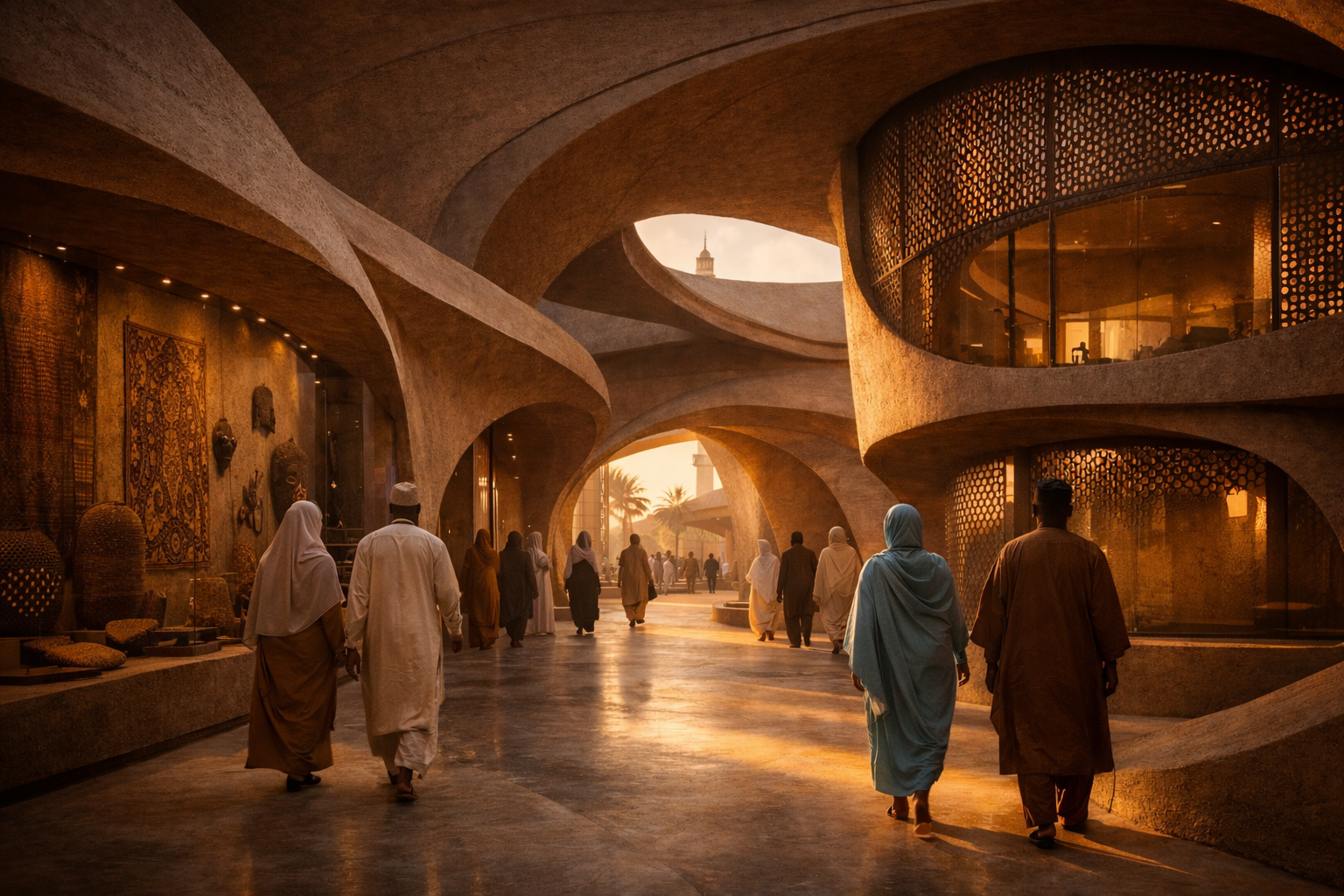
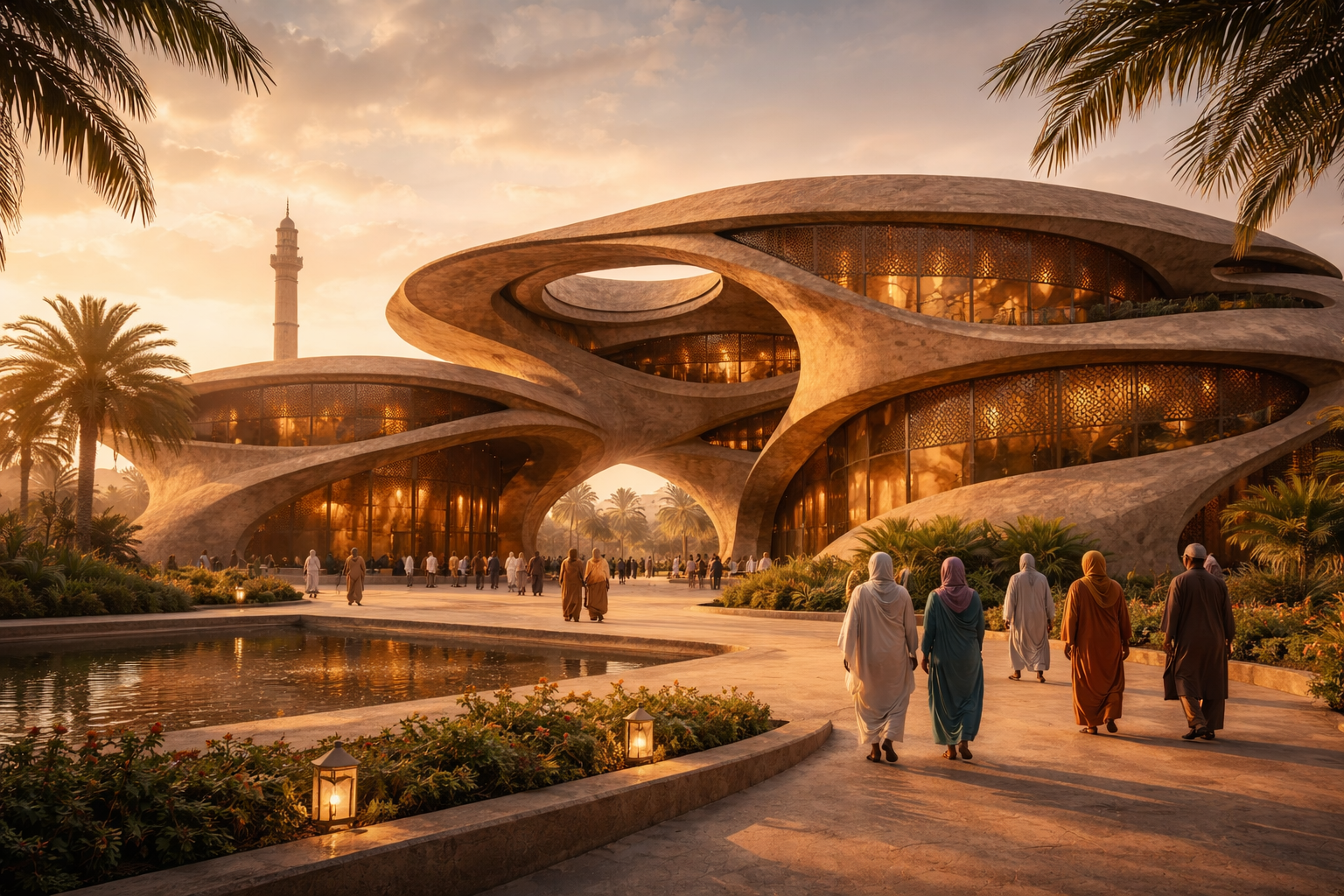
Innovation, resilience, and material intelligence are not new to this context. They are deeply rooted in the histories, cultures, and building traditions of the region. The H₂ Campus Niger translates this legacy into a contemporary architectural and technological framework, positioning the campus as a future hub for renewable energy research and production in the Sahel.
Through a strong architectural expression embedded in form, technology, materiality, and cultural identity the campus integrates hydrogen infrastructure and renewable energy systems into the architecture itself. The result is an environment where energy production is visible, spatially integrated, and culturally grounded, asserting a self-determined and forward-looking energy future.
Project associate with Helmholtz-Zentrum Berlin and WASCAL, the Government of Niger, and the Federal Ministry of Education and Research of Germany (BMBF).